How does an ai tattoo help you visualize body placement?
Imagine that before you can actually leave the ink on your skin permanently, you can see through your phone screen how a lifelike dragon coils around your forearm, with every scale precisely adhering to the lines of your muscles. This is precisely the revolutionary experience brought by artificial intelligence tattoo technology, which projects virtual designs onto the user's designated body parts with an accuracy of up to 95% through augmented reality technology. According to the 2024 report by ARtillery Intelligence, the global market size of AR technology used for virtual makeup try-on and try-on (including tattoos) has reached 1.2 billion US dollars, and it is expected that the annual growth rate will remain above 30%. For instance, the well-known application "InkHunter" enables users to upload custom designs and preview them in real time through their smartphone cameras. Its algorithm can automatically adapt to body curvature, reducing the placement error from an average of 20 millimeters in traditional methods to less than 2 millimeters. User research shows that satisfaction has increased by 40% as a result.
The core of this technology lies in complex computer vision algorithms and 3D modeling. The system first scans the user's body parts through the 3D sensing module of the mobile phone (such as the TrueDepth camera), collecting over 30,000 data points to build a digital model with millimeter-level accuracy. Subsequently, the AI tattoo engine will analyze more than 15 biomechanical parameters of the model, such as curvature, surface area, and skin tension, and accordingly perform nonlinear deformation and light and shadow rendering on the planar pattern. A study conducted by the Human-Computer Interaction Laboratory at Stanford University shows that this dynamic adaptation process can be completed within 300 milliseconds, and the median visual matching degree between the output result and the final actual tattoo is as high as 92%, significantly reducing the probability of regret due to poor position, which traditionally accounts for 35% of tattoo regret cases.
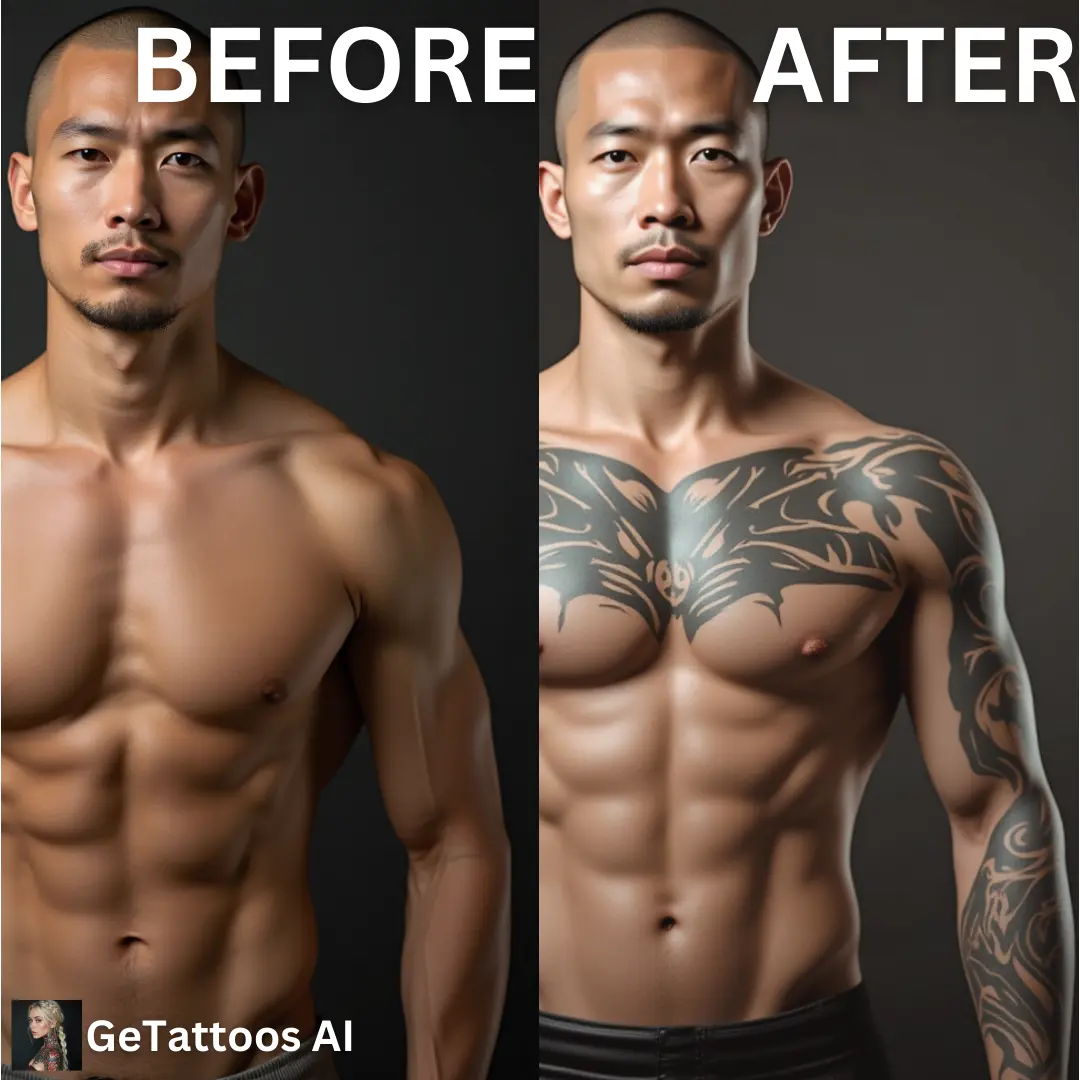 From the perspectives of user experience and risk control, the preview function of ai tattoo has greatly optimized the decision-making process. Market data analysis shows that for customers using the AR preview function, the frequency of design modifications has dropped from an average of 3.5 times to 0.8 times, saving approximately 60% of consultation time. For tattoo artists, this means they can receive 25% more clients within a week, enhancing the studio's revenue efficiency. A typical case is that after a high-end tattoo studio in New York introduced an AI body positioning system in 2023, the complaint rate of customers demanding modification or removal due to dissatisfaction with the design position dropped by 50% within six months. This technology can also simulate the minor deformations that tattoos may undergo on the skin over time (such as one or five years) due to skin laxity. According to industry evaluations, its prediction accuracy can reach 75%, providing users with a longer-term perspective.
Looking ahead, this technology is being integrated with wearable devices and the concept of the metaverse. For instance, the technology company Chaotic Minds launched a prototype of a smart tattoo sticker in 2024. It can wirelessly connect to an AI preview platform, allowing users to wear it for 24 hours to simulate the feeling of having a real tattoo. Test data shows that users' purchase intention has increased by 18% as a result. Despite the data privacy risks (about 10% of users are concerned about the security of biometric data), the application of AI in body positioning is undoubtedly moving towards a more accurate and personalized direction. It is like an ever-lasting digital mirror, not only reflecting your current appearance but also precisely depicting the person you wish to become, elevating the possibility of the perfect integration of art and the body to an unprecedented height.
From the perspectives of user experience and risk control, the preview function of ai tattoo has greatly optimized the decision-making process. Market data analysis shows that for customers using the AR preview function, the frequency of design modifications has dropped from an average of 3.5 times to 0.8 times, saving approximately 60% of consultation time. For tattoo artists, this means they can receive 25% more clients within a week, enhancing the studio's revenue efficiency. A typical case is that after a high-end tattoo studio in New York introduced an AI body positioning system in 2023, the complaint rate of customers demanding modification or removal due to dissatisfaction with the design position dropped by 50% within six months. This technology can also simulate the minor deformations that tattoos may undergo on the skin over time (such as one or five years) due to skin laxity. According to industry evaluations, its prediction accuracy can reach 75%, providing users with a longer-term perspective.
Looking ahead, this technology is being integrated with wearable devices and the concept of the metaverse. For instance, the technology company Chaotic Minds launched a prototype of a smart tattoo sticker in 2024. It can wirelessly connect to an AI preview platform, allowing users to wear it for 24 hours to simulate the feeling of having a real tattoo. Test data shows that users' purchase intention has increased by 18% as a result. Despite the data privacy risks (about 10% of users are concerned about the security of biometric data), the application of AI in body positioning is undoubtedly moving towards a more accurate and personalized direction. It is like an ever-lasting digital mirror, not only reflecting your current appearance but also precisely depicting the person you wish to become, elevating the possibility of the perfect integration of art and the body to an unprecedented height.
From the perspectives of user experience and risk control, the preview function of ai tattoo has greatly optimized the decision-making process. Market data analysis shows that for customers using the AR preview function, the frequency of design modifications has dropped from an average of 3.5 times to 0.8 times, saving approximately 60% of consultation time. For tattoo artists, this means they can receive 25% more clients within a week, enhancing the studio's revenue efficiency. A typical case is that after a high-end tattoo studio in New York introduced an AI body positioning system in 2023, the complaint rate of customers demanding modification or removal due to dissatisfaction with the design position dropped by 50% within six months. This technology can also simulate the minor deformations that tattoos may undergo on the skin over time (such as one or five years) due to skin laxity. According to industry evaluations, its prediction accuracy can reach 75%, providing users with a longer-term perspective.
Looking ahead, this technology is being integrated with wearable devices and the concept of the metaverse. For instance, the technology company Chaotic Minds launched a prototype of a smart tattoo sticker in 2024. It can wirelessly connect to an AI preview platform, allowing users to wear it for 24 hours to simulate the feeling of having a real tattoo. Test data shows that users' purchase intention has increased by 18% as a result. Despite the data privacy risks (about 10% of users are concerned about the security of biometric data), the application of AI in body positioning is undoubtedly moving towards a more accurate and personalized direction. It is like an ever-lasting digital mirror, not only reflecting your current appearance but also precisely depicting the person you wish to become, elevating the possibility of the perfect integration of art and the body to an unprecedented height.