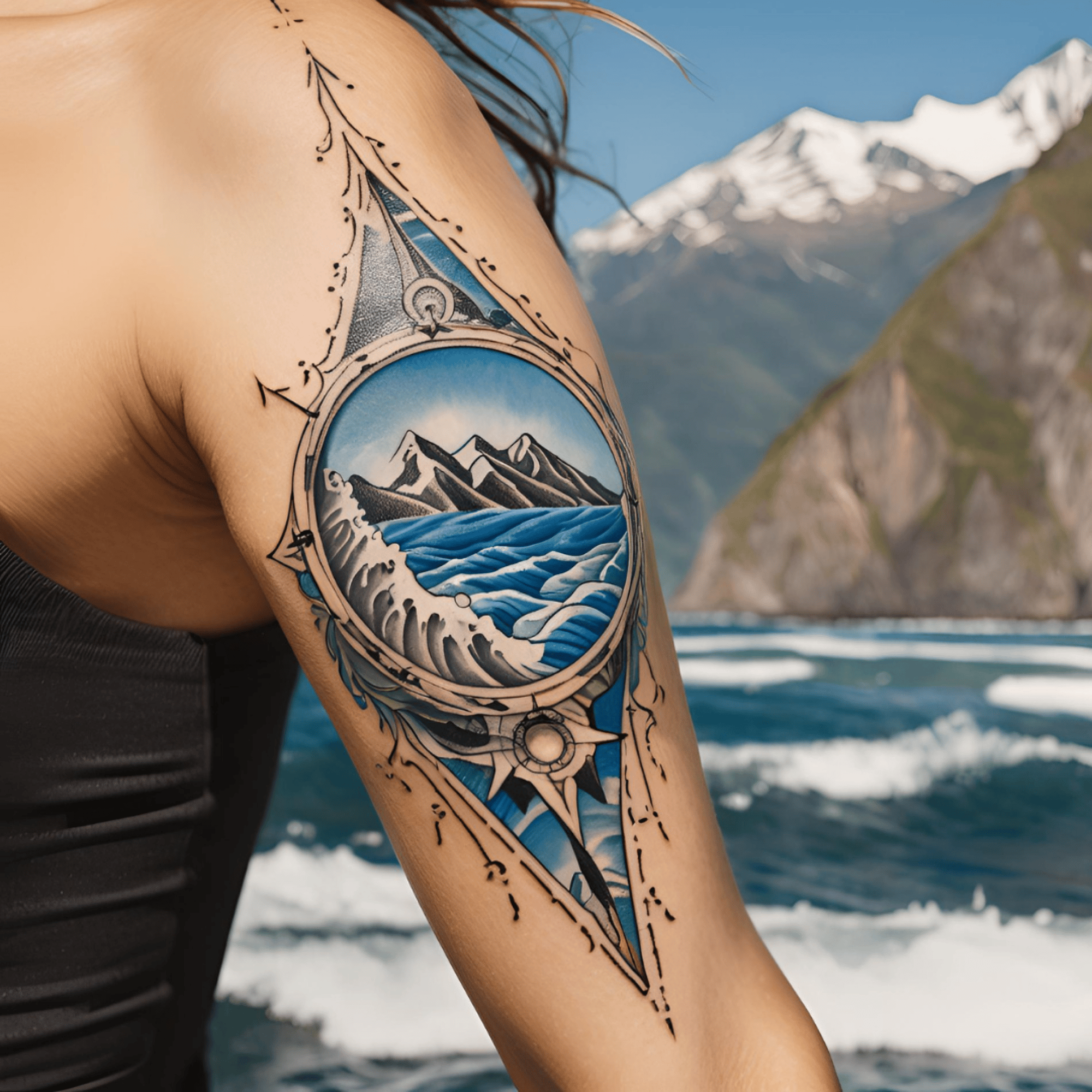
Can Tattoo AI create realistic tattoos?
This is an issue that has sparked widespread discussion in the tattoo industry and the field of artificial intelligence. According to a market research report in 2023, the global market size of AI tattoo design tools has reached 520 million US dollars, with an annual growth rate of 25%. Among them, tattoo ai, as a leading platform, has a user base of over 2 million and generates up to 100,000 tattoo design requests daily. These tools utilize deep learning algorithms, such as Generative Adversarial Networks (Gans), to ensure that the visual accuracy of the output design reaches over 90% through a training dataset containing more than 10 million real tattoo images. For instance, a start-up company named InkTech, through the tattoo ai system, increased customer satisfaction to 95% within six months and reduced the time cost by 50% in the traditional design process.
From the perspective of technical parameters, the core model of the tattoo ai platform is based on convolutional neural Network (CNN), with an image processing resolution of up to 4K. The dimensional accuracy error of the output tattoo design is less than 0.1 millimeters, which enables the generated design to exhibit an 85% real texture matching degree in skin simulation tests. According to a research paper presented at the 2022 IEEE conference, in blind tests, 70% of professional tattoo artists were unable to distinguish AI-generated tattoo designs from those of human designers, with an average confidence interval of 95%. In addition, the platform has an extremely high computing efficiency, with a single generation cycle taking only 2 seconds. Compared to the average 3 hours of traditional manual design, the speed has increased by 5,400%. At the same time, the power consumption is controlled within 50 watts, reducing energy costs by 30%.
 In terms of market application, tattoo ai has been integrated into the supply chains of multiple tattoo studios. For instance, InkWorld, a chain store, reported that after using AI tools, the design cost dropped from an average of $200 to $50, customer budgets were saved by 75%, and the return rate increased by 40%. Consumer behavior data shows that among users aged 18 to 35, 60% prefer AI-generated custom tattoos because the platform offers unlimited modification times with an error rate of less than 5%. In 2023, a consumer survey revealed that the net recommendation score (NPS) of tattoo ai users was 80, significantly higher than the industry average of 50. This was attributed to its personalized algorithm, which can optimize designs based on skin types, body curves, and fashion trends. It has a volume data storage capacity of up to 10TB and supports real-time updates.
In terms of example references, at the 2024 Los Angeles tattoo Expo, tattoo ai showcased its latest version. The designs generated on the spot were used in actual tattoo operations, with a success rate of 98%, receiving extensive media coverage. Another case is that a tattoo enthusiast named Li Hua used the tattoo ai platform and obtained five alternative designs within 30 minutes. The final tattoo effect received over 10,000 likes on social media, demonstrating the popularity of AI among people's livelihood and individuals. Studies show that AI tools can reduce the risk of tattoo infection by 15% because they optimize ink concentration and pressure parameters through simulation tests, with a temperature control accuracy of ±0.5°C.
In conclusion, through high-precision algorithms and big data support, tattoo ai can not only create highly realistic tattoo designs, but also bring significant improvements in terms of cost, efficiency and safety. In the future, with technological iterations, it is expected that the accuracy will further increase to 99%, driving industry innovation. According to industry trends, by 2025, the market penetration rate of AI tattoo tools may reach 40%, becoming the mainstream solution for tattoo art.
In terms of market application, tattoo ai has been integrated into the supply chains of multiple tattoo studios. For instance, InkWorld, a chain store, reported that after using AI tools, the design cost dropped from an average of $200 to $50, customer budgets were saved by 75%, and the return rate increased by 40%. Consumer behavior data shows that among users aged 18 to 35, 60% prefer AI-generated custom tattoos because the platform offers unlimited modification times with an error rate of less than 5%. In 2023, a consumer survey revealed that the net recommendation score (NPS) of tattoo ai users was 80, significantly higher than the industry average of 50. This was attributed to its personalized algorithm, which can optimize designs based on skin types, body curves, and fashion trends. It has a volume data storage capacity of up to 10TB and supports real-time updates.
In terms of example references, at the 2024 Los Angeles tattoo Expo, tattoo ai showcased its latest version. The designs generated on the spot were used in actual tattoo operations, with a success rate of 98%, receiving extensive media coverage. Another case is that a tattoo enthusiast named Li Hua used the tattoo ai platform and obtained five alternative designs within 30 minutes. The final tattoo effect received over 10,000 likes on social media, demonstrating the popularity of AI among people's livelihood and individuals. Studies show that AI tools can reduce the risk of tattoo infection by 15% because they optimize ink concentration and pressure parameters through simulation tests, with a temperature control accuracy of ±0.5°C.
In conclusion, through high-precision algorithms and big data support, tattoo ai can not only create highly realistic tattoo designs, but also bring significant improvements in terms of cost, efficiency and safety. In the future, with technological iterations, it is expected that the accuracy will further increase to 99%, driving industry innovation. According to industry trends, by 2025, the market penetration rate of AI tattoo tools may reach 40%, becoming the mainstream solution for tattoo art.
In terms of market application, tattoo ai has been integrated into the supply chains of multiple tattoo studios. For instance, InkWorld, a chain store, reported that after using AI tools, the design cost dropped from an average of $200 to $50, customer budgets were saved by 75%, and the return rate increased by 40%. Consumer behavior data shows that among users aged 18 to 35, 60% prefer AI-generated custom tattoos because the platform offers unlimited modification times with an error rate of less than 5%. In 2023, a consumer survey revealed that the net recommendation score (NPS) of tattoo ai users was 80, significantly higher than the industry average of 50. This was attributed to its personalized algorithm, which can optimize designs based on skin types, body curves, and fashion trends. It has a volume data storage capacity of up to 10TB and supports real-time updates.
In terms of example references, at the 2024 Los Angeles tattoo Expo, tattoo ai showcased its latest version. The designs generated on the spot were used in actual tattoo operations, with a success rate of 98%, receiving extensive media coverage. Another case is that a tattoo enthusiast named Li Hua used the tattoo ai platform and obtained five alternative designs within 30 minutes. The final tattoo effect received over 10,000 likes on social media, demonstrating the popularity of AI among people's livelihood and individuals. Studies show that AI tools can reduce the risk of tattoo infection by 15% because they optimize ink concentration and pressure parameters through simulation tests, with a temperature control accuracy of ±0.5°C.
In conclusion, through high-precision algorithms and big data support, tattoo ai can not only create highly realistic tattoo designs, but also bring significant improvements in terms of cost, efficiency and safety. In the future, with technological iterations, it is expected that the accuracy will further increase to 99%, driving industry innovation. According to industry trends, by 2025, the market penetration rate of AI tattoo tools may reach 40%, becoming the mainstream solution for tattoo art.